You’ve just signed the lease on that two-bedroom in Joliet near Route 30.
The landlord handed you keys, mentioned the no-pet clause, and said “renters insurance is recommended.”
Recommended.
That word does a lot of heavy lifting, doesn’t it?
Let’s rewind.
It’s 2 AM. A pipe bursts in the unit above yours. Not your fault. Not your landlord’s fault either, technically.
Water pours through the ceiling light fixture. Your laptop. Your couch. That hard drive with five years of freelance work.
Who pays?
You might think the landlord’s property policy steps in.
Think again.
A landlord’s dwelling policy – the standard DP-1 or DP-3 – covers the building. The walls. The floors. The stove they bought at Menards in 2019.
Your stuff? That’s a hard no.
Here’s where the Joliet rental market gets interesting.
We’re seeing rents climb year over year, pushing 8-10% increases depending on the ZIP. More people are renting longer. The average tenant in Will County now stays in a rental for over four years.
That means more possessions. More exposure. More “I didn’t know” moments when the adjuster says no.
So what actually lands on your HO-4 policy – that’s the technical name for renters insurance – that your landlord won’t touch?
Three big buckets.
Personal property. Coverage C in the policy form. Replacement cost vs. actual cash value. Ask any agent in Joliet about the difference and they’ll tell you a story. Actual cash value means you get the 2022 value of that three-year-old TV. Replacement cost means you get what it costs to buy the same model today. The premium difference? Usually less than a monthly streaming subscription.
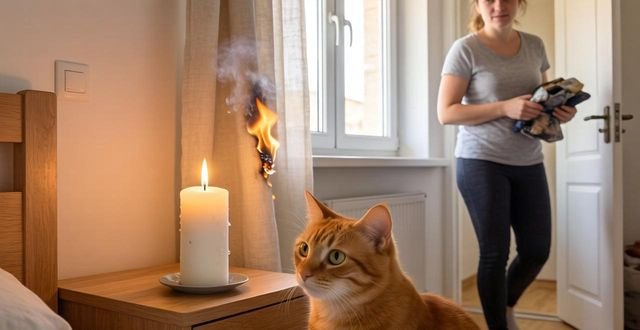
Loss of use. Your place becomes uninhabitable. Not your fault. Fire. Tornado. That weird electrical thing in the walls. The policy pays for your hotel, your meals over the normal budget, your laundry. The standard is 20-30% of your personal property limit. Check yours. Many Joliet renters run with $25k in property but only $5k in loss of use. Try living on that for three months in a post-claim rental market.
Liability. Here’s the one nobody thinks about until the letter arrives. Your guest slips on the ice you didn’t salt. Your dog – the one you swore was friendly – bites the maintenance guy. You leave the bathtub running and it floods three units below. The standard liability limit is $100k. Is that enough in today’s litigation environment? An ambulance ride, an ER visit, a week of missed work from the neighbor downstairs – that number gets thin fast.
But there is a catch.
And this is where most online quote tools hide the needle.
The deductible.
You see a policy for $11/month. Great. Then you read the declarations page. $2,500 deductible on personal property. That means you’re self-insuring the first $2,500 of any loss. How many renters in Joliet have $2,500 liquid for an emergency? The data says less than 40% in this region.
So that cheap policy isn’t cheap. It’s just shifted risk back to you.
Let’s talk carriers, because not all HO-4 forms read the same.
State Farm writes a broad-form policy. Their loss of use coverage is typically 20% of C, but they offer a “replacement cost on contents” endorsement that actually works. Their claims response in Will County? Average first contact within 48 hours per the last department filing.
Allstate runs a more modular approach. You can stack loss of use up to 40% or 50% if you pay. But their standard liability is often $100k with a low-cost bump to $300k. Worth the $2 extra per month? Run the math on a worst-case day.
Progressive – really Homesite behind the scenes – competes on price. Their application flow takes seven minutes. But their water backup endorsement is an add-on, not standard. And in Joliet’s older housing stock with combined sewer systems? Water backup isn’t a niche claim. It’s a when.
Now for the part most agents won’t tell you.

Group coverage through your employer or alumni association.
It looks cheap. Half the price of a standalone policy. But read the certificate.
Many group renters policies are actual cash value only. And the liability limit might be $25k. And loss of use? Often capped at $2,500 flat, not a percentage of C.
You get what you pay for.
The other blind spot: roommates.
You and your roommate both pay rent. Two names on the lease. One policy under your name. His stolen bike? Not covered. Her guest gets hurt in the common area? The liability defense comes out of your limit, and you have no contribution from her.
The correct structure: separate policies, each with your own name as the named insured, each with your own property schedule. Or a shared policy written specifically with co-named insureds – some carriers allow this, some don’t. Ask before you buy.
Now the question sitting in the back of your mind.
“How much coverage do I actually need?”
Walk through your unit. Room by room.
Bedroom: clothes, shoes, that watch, the laptop, the phone, the tablet, the chargers, the air purifier, the bedding.
Living room: couch, television, soundbar, media console, records, books, the coffee table you actually like, the rug, the art on the wall.
Kitchen: small appliances, cookware,the knife set, the food in the pantry – yes, food spoilage is covered under some policies if the power fails due to a covered loss.
Office: monitor, desk, chair, backup drives, printer, the webcam, the microphone, the standing desk frame.
Add it up. Most people land between $20k and $40k without trying. A working professional with a hobby? Photography gear. Bicycles. Musical instruments. That number climbs to $60k quickly.
Joliet-specific reminder: tornadoes. We sit in a zone that sees activity every spring. Your policy covers wind. It covers tornado. But it does NOT cover flood. That’s a separate policy through NFIP or a private carrier, and no, your renters policy won’t pay when the Des Plaines River backs up into the basement storage unit.
Watch the endorsements.
Scheduled personal property. If you have a single item over $1,500 – engagement ring, high-end camera body, road bike – the standard policy caps theft coverage on that item at $1,500. You need a scheduled floater. It costs extra. It matters.
Identity theft. Many basic HO-4 forms exclude it. Some carriers offer it as a $25/year add-on. In an era of leaked data and compromised renter applications? That’s cheap sleep.
The bottom line.
Your landlord’s policy covers the roof over your head and the studs in the wall. Everything inside those walls – the life you’ve built, the tools you use to earn, the clothes you wear to the interview – that’s on you.
Joliet rents aren’t dropping. Neither are claim frequencies.
So here is the action step that changes the math.
Do not buy the first $9 quote you see.
Pull the declarations page. Check the deductible. Verify replacement cost on contents. Confirm loss of use is at least 20% of your property limit. Make sure water backup is included or offered. Ask about the roommate situation in writing.
Then call three independent agencies in Will County – not just the direct writer websites – and ask for the same coverage specs on paper.
Compare the premium. Compare the carrier’s A.M. Best rating. Compare the claims phone number hours – 24/7 or business hours only?
One afternoon of work. Four years of smarter risk placement.
Because when the pipe bursts at 2 AM, the only thing standing between you and a full-loss letter from the adjuster is the quality of the policy you bought six months ago when nothing was on fire.