You just signed a lease for that walk-up in Midtown or a duplex near Waldo. The landlord smiled, handed you the keys, and said, “Oh, and we don’t require renters insurance here.”
Wait — that’s a green light to skip it, right? Actually, no. Here is where things get tricky.
That “no requirement” is a trap. Not a malicious one,but the kind that feels good until something real happens. A pipe bursts above your kitchen. A neighbor’s space heater does what space heaters do. Or — because this is Kansas City — a straight-line wind rips through Jackson County and sends a branch through your bedroom window.
Without renters insurance, every single thing inside that apartment becomes a personal loss. Your laptop? Gone. That couch you financed? Still on the credit card. The clothes, the books, the random collection of coffee mugs from road trips — all of it, poof.
But let’s slow down. What does a standard HO-4 policy actually do? It splits into two big buckets: personal property and liability.
The property part covers your stuff, typically at “actual cash value” unless you pay a few extra dollars for “replacement cost.” That distinction matters — a lot. Actual cash value means your three-year-old TV is worth whatever someone would pay at a garage sale. Replacement cost means you get a new one. Which sounds better? Exactly.
The liability part is the quiet hero. Say your guest trips over a dumbbell you left in the hallway. They break a wrist, miss work, and decide you’re responsible. Renters insurance writes the check for their medical bills and legal fees — up to your limit (usually $100,000 or $300,000). Without it? You’re writing that check yourself.
Now let’s compare two carriers you’ll find in Kansas City. Not to pick winners, but to show you how the fine print changes everything.
| Feature | Carrier A (big national name) | Carrier B (regional mutual) |
|---|---|---|
| Monthly premium (similar coverage) | $18–22 | $14–17 |
| Water backup coverage | Optional, +$5/mo | Included |
| Deductible choices | $500, $1,000, $2,500 | $250, $500, $1,000 |
| Claims satisfaction (JD Power) | Above average | Average |
| Pet liability exclusion | Yes for certain breeds | No breed restriction |
See the difference? It’s not about which company is “better.” It’s about whether the policy matches your actual risk. If you live in a basement unit near Brush Creek, that water backup endorsement isn’t a luxury — it’s the whole point.
Here are three mistakes people in KC make every single year. None of them sound stupid at the time.
Mistake #1: “My landlord’s insurance will cover my stuff.”
No. Your landlord’s policy covers the building — the roof, the hallway carpet, the water heater. Your PlayStation and your winter coat are your problem.
Mistake #2: “I don’t own anything expensive.”

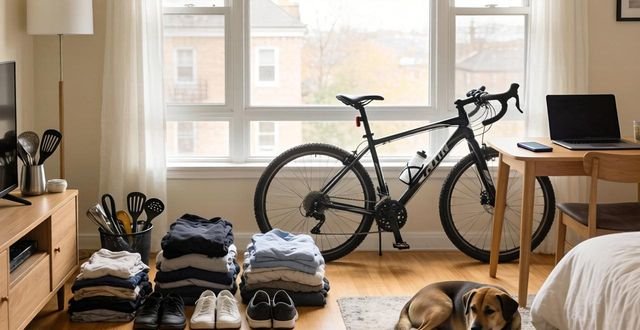
Add it up. Phone, laptop, clothes, shoes, kitchen gear, bedding, a bicycle, a few tools. Most renters are shocked when the total passes $15,000. That’s real money.
Mistake #3: “I’ll just buy the cheapest policy online.”
You can get a policy for $9/month from a direct-to-consumer app. But read that contract. It might exclude “mysterious disappearance” (aka theft you can’t prove). It might cap electronics at $1,000. Cheap feels good until you file a claim and get nothing.
So what should you actually do? Not a vague “just buy some.” Here is your step‑by‑step.
First, walk through every room and write down what you own. Don’t guess. Open drawers. Check that closet. Use your phone’s camera to record serial numbers if you want to be a pro.
Second, decide if you want actual cash value or replacement cost. The second one costs maybe $3–6 more per month. If you can afford a latte, you can afford the upgrade.
Third, get three quotes. One from a captive agent (State Farm, Allstate), one from an independent broker (that’s where I come in), and one from a direct online issuer like Lemonade or Toggle. Compare the declarations page, not just the price.
Fourth, check your deductible against your savings account. If a $1,000 deductible means you’d barely blink, fine. If it would ruin your month, pay the extra $2/month for a $250 deductible.
Now the part most agents won’t tell you: renters insurance is almost never taxable. The IRS doesn’t consider claim payouts for destroyed property as income. The one exception? If you claimed a deduction for that property on a prior tax return (like a home office write‑off when you were self‑employed). But for 99% of renters, the money you get from a claim is yours, tax‑free.
And one more wrinkle. Some landlords in Kansas City have started requiring “additional insured” endorsements. That means they want their name added to your policy so they get notified if you cancel. It’s not a scam — it protects them from liability if you cause a fire that spreads to another unit. But it might add $5–10 to your annual premium. Annoying? Sure. Avoidable? Not if you want that lease.
Does all of this sound like a hassle? Maybe. But think of it like this: you lock your car doors even though you’ve never had it stolen. You check your tire pressure before a road trip. Renters insurance is the same muscle — a small, boring habit that feels pointless until the moment it saves you thousands.
You don’t have to overthink it. Call an independent agent in Johnson County or Clay County tomorrow morning. Or spend fifteen minutes online today. The policy won’t fix the wind or the burst pipe or the clumsy guest. But it will make sure those things don’t turn into a financial knockout punch.
And that — the quiet ability to shrug and say “I’m covered” — is worth more than the twelve bucks.