Introduction: Why Apartment Renters Need Specialized Insurance Coverage
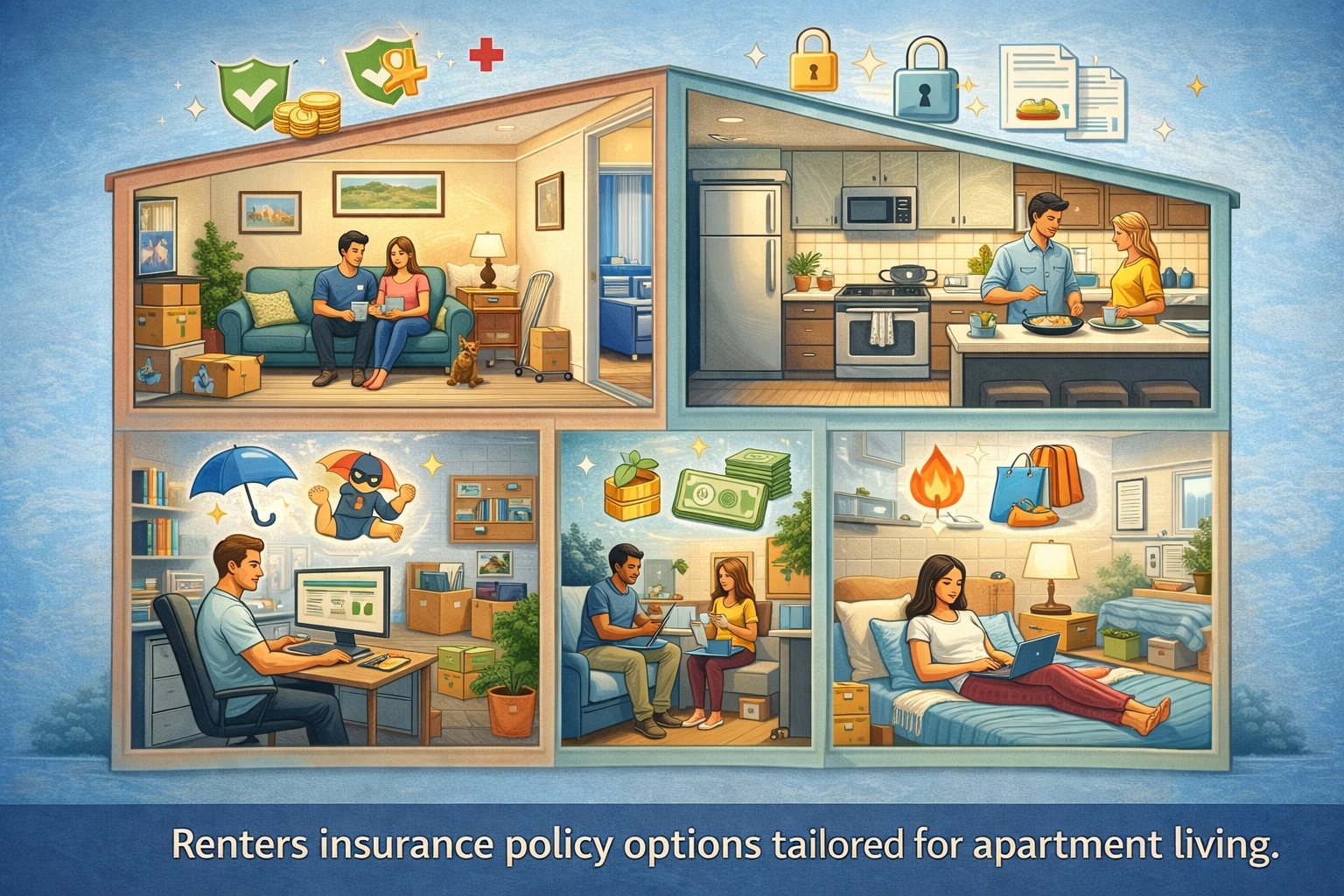
Apartment living is the most common form of rental housing in the United States, spanning urban high-rises, suburban complexes, and mixed-use residential buildings. While apartments offer convenience and flexibility, they also present unique insurance risks related to shared structures, neighboring units, and landlord-tenant responsibilities. For these reasons, understanding renters insurance policy options for apartments is essential for protecting personal finances and meeting lease obligations.
This article explores how Renters Insurance applies specifically to apartment renters, the policy options available, and how tenants can customize coverage based on apartment size, location, and lifestyle.
Why Renters Insurance Is Essential for Apartment Living
Many apartment renters mistakenly believe that their landlord’s insurance policy protects them in the event of a loss. In reality, a landlord’s policy covers only the physical building—not the tenant’s personal property or liability exposure.
Renters Insurance fills this critical gap by providing:
-
Protection for personal belongings
-
Personal liability coverage
-
Coverage for additional living expenses if the apartment becomes uninhabitable
As apartment buildings concentrate many residents within a single structure, the likelihood of shared risks—such as fire, water damage, or liability claims—increases significantly.
Overview of Renters Insurance Policy Options for Apartments
Renters Insurance policies for apartments are designed to be flexible and scalable. Most U.S. insurers offer standardized policy forms with customizable limits and optional endorsements.
Key renters insurance policy options for apartments include:
-
Personal property coverage limits
-
Liability coverage limits
-
Deductible choices
-
Replacement cost vs actual cash value
-
Optional endorsements for enhanced protection
Understanding these options allows apartment renters to tailor coverage to their specific living environment.
Personal Property Coverage in Apartment Settings
Personal property coverage protects belongings inside the apartment unit and, in many cases, outside the premises.
Covered Items Typically Include:
-
Furniture and appliances owned by the renter
-
Clothing and personal effects
-
Electronics and smart home devices
-
Kitchenware and household goods
Apartment renters should assess the total replacement value of their belongings to avoid underinsurance. Small apartments can still contain tens of thousands of dollars in personal property.
Replacement Cost vs Actual Cash Value
One of the most important renters insurance policy options for apartments is the choice between:
-
Actual Cash Value (ACV), which deducts depreciation
-
Replacement Cost Coverage (RCV), which reimburses the cost to replace items with new equivalents
Replacement cost coverage is generally recommended for apartment renters due to high turnover of personal electronics and furnishings.
Liability Coverage in Apartment Buildings
Liability risk is higher in apartment environments due to shared walls, hallways, elevators, and common areas. Renters Insurance liability coverage protects tenants if they are legally responsible for injuries or property damage to others.
Common Apartment Liability Scenarios:
-
Water damage affecting a neighboring unit
-
Guests injured inside the apartment
-
Accidental damage to building property
-
Pet-related injuries (subject to exclusions)
Standard policies often start with $100,000 in liability coverage, but higher limits are available and recommended, especially in multi-unit buildings.
Coverage for Additional Living Expenses
If an apartment becomes uninhabitable due to a covered loss, Renters Insurance can reimburse additional living expenses such as:
-
Temporary housing
-
Restaurant meals
-
Transportation costs related to displacement
This coverage is particularly valuable for apartment renters in dense urban markets, where short-term housing costs can be high.
Policy Customization Based on Apartment Size and Layout
Renters insurance policy options for apartments vary depending on the size and layout of the unit.
Studio and One-Bedroom Apartments
-
Lower personal property limits may be sufficient
-
Replacement cost coverage remains critical
-
Liability coverage should not be minimized
Larger Apartments and Multi-Bedroom Units
-
Higher property limits needed for shared furnishings
-
Increased liability exposure due to multiple occupants
-
Potential need for endorsements covering roommates’ belongings
Landlord Requirements and Lease Agreements
Many landlords now require Renters Insurance as a condition of the lease. These requirements often specify:
-
Minimum liability coverage limits
-
Proof of insurance documentation
-
Continuous coverage throughout the lease term
Understanding renters insurance policy options for apartments helps renters comply with lease terms while selecting coverage that meets both legal and personal protection needs.
Optional Endorsements for Apartment Renters
Apartment renters can enhance standard Renters Insurance policies with optional endorsements, including:
-
Scheduled personal property coverage for valuables
-
Water backup coverage
-
Identity theft protection
-
Increased liability limits
These endorsements are especially valuable in apartment buildings with shared plumbing systems and higher exposure to water-related losses.
Choosing the Right Policy for Urban vs Suburban Apartments
Location plays a significant role in determining optimal coverage.
Urban Apartments:
-
Higher theft risk
-
Greater liability exposure
-
Higher temporary housing costs
Suburban Apartments:
-
Lower crime rates
-
Increased risk from weather events
-
Larger units with higher property values
Renters Insurance policy options for apartments should reflect these location-based risk factors.
How to Compare Renters Insurance Policy Options for Apartments
When comparing policies, apartment renters should evaluate more than just price. Key comparison factors include:
-
Coverage limits and sub-limits
-
Deductibles
-
Policy exclusions
-
Claims handling reputation
-
Endorsement availability
Comparing multiple quotes helps renters identify policies that provide strong coverage without unnecessary costs.
Common Mistakes Apartment Renters Make
Common errors include:
-
Underestimating the value of personal property
-
Choosing the lowest liability limit
-
Ignoring policy exclusions
-
Failing to update coverage after moving
Avoiding these mistakes ensures renters insurance policy options for apartments remain aligned with evolving living situations.
Conclusion: Smart Policy Choices for Apartment Renters
Renters Insurance is a fundamental risk management tool for apartment dwellers in the United States. By understanding renters insurance policy options for apartments, tenants can protect their belongings, finances, and legal interests while meeting landlord requirements.
A well-structured policy offers affordable, flexible protection tailored to apartment living—providing peace of mind in an increasingly complex rental environment.